 Lithium-ion & Polymer Battery Packs Manufacturer | KBT Battery


Company Blog
High quality high performance excellent service
Search productSearch post
High quality high performance excellent service
Many battery-pack purchasing problems start with a specification that sounds complete but is not. A buyer may send a supplier only “7.4V, 5,000mAh, with a plug,” then discover that the cable is too short, the connector does not mate with the device, or the positive and negative wires exit from the wrong side.
This guide explains how to specify a custom lithium battery pack with cable and connector before requesting samples or a quote. It is written for OEM engineers, importers, distributors, and project buyers. KBT Battery supports standard and project-specific pack configurations, including cell type, BMS, cables, connectors, terminal wires, and battery tips. Review the lithium battery pack product range before preparing an RFQ.
The cable is part of the electrical and mechanical interface, not an accessory added at the end:
A supplier can quote the same voltage and capacity with several different harness configurations. The lowest initial price is not useful if the sample cannot be installed without rework.
State the required nominal voltage and the charger’s output voltage separately. A lithium-ion pack’s nominal voltage is not the same as its full-charge voltage. Also state whether the capacity is a minimum usable capacity, a nominal rating, or a target at a defined test condition.
For energy planning, use Wh = nominal voltage x capacity in Ah. If you know the series and parallel arrangement, include it; otherwise provide device voltage, runtime, load profile, and enclosure limits.
Do not specify cable size from capacity alone. Give the normal current, highest current, and peak duration. Motors, pumps, transmitters, and power tools can draw short surges above their average current.
Ask the supplier to confirm the selected wire, terminal, and connector as one electrical path. The rating of a connector family does not automatically prove that every assembled cable configuration has the same current capability.
Write the complete connector requirement, not only a brand or nickname. Include series, housing part number, positions, gender, keying, and mating part number. Pitch and applicable wire range also matter. JST, for example, publishes XH series specifications that must be checked against the exact part and wire. See the official JST XH specification.
| Connector or termination | When buyers often consider it | Information to send with the RFQ |
|---|---|---|
| JST-style wire-to-board connector | Compact electronics, sensors, and control boards | Series, pitch, positions, mating header, keying, and wire size |
| DC barrel connector such as DC5521 | Equipment with a defined DC input socket | Outer/inner diameter, plug length, center polarity, mating socket photo, and current requirement |
| XT60, T-plug, or EC5-style power connector | Portable equipment, RC systems, and power tools | Housing, mating half, current profile, wire gauge, and locking needs |
| Terminal wire or custom battery tip | Products that connect directly to a spring contact, terminal block, or dedicated holder | Tip geometry, material, dimensions, polarity, insertion depth, and contact pressure requirements |
Polarity errors are preventable when the drawing is unambiguous. Send a connector-side view and a battery-side view, then mark pin 1, positive, negative, and any signal or balance wires. State whether positive and negative should exit from the same end, opposite ends, or a specified side of the pack.
Also provide bend direction, clearance, and the point used to measure length. A cable measured from the cell edge differs from one measured from the sleeve or strain relief.
The BMS must match the cell chemistry and series count. State the required over-charge, over-discharge, over-current, short-circuit, and temperature protections. Specify any communication protocol separately from the power connector.
Provide the charger model or its voltage and current. Validate the pack, BMS, cable, connector, and charger as one system.
| Approach | Advantage | Typical risk |
|---|---|---|
| Buy a pack and add the connector locally | May look simple for a prototype | Polarity, crimp quality, warranty responsibility, and repeatability become the buyer’s problem |
| Buy a standard pack with a supplier cable | Faster when the standard interface already matches | Length, exit direction, wire gauge, or mating half may not fit the final product |
| Order a custom pack with a validated harness | One controlled specification and one supplier interface | Requires a clear drawing, sample approval, and change control before volume production |
Sample approval should check more than open-circuit voltage. Use a short, repeatable checklist:
For outdoor, vibrating, or frequently serviced products, add relevant environmental and mechanical checks. Confirm which tests apply to the exact pack rather than treating a generic report as proof for every configuration.
Send the following information before asking for price and lead-time feedback:
KBT Battery can review these details and advise whether a standard model or OEM configuration is the better starting point. Send KBT your battery pack requirements with a drawing or device photo.
Yes, a project can be evaluated with a specified cable, wire gauge, connector, terminal wire, battery tip, polarity, and exit direction. The supplier should confirm the configuration against the pack’s voltage, current, BMS, and charger requirements.
That is a useful starting point, but it is not enough for a reliable quote. Add the device load, peak current, available space, connector photo or mating part number, cable length, charger details, and expected order volume.
Use a drawing with both viewing directions, label positive and negative, identify pin 1, and include a photo of the mating connector. State whether the wires exit from the same end or opposite ends of the pack.
No. Documents and test evidence depend on the exact cell, pack design, production configuration, and shipment or target-market requirement. Ask the supplier to confirm the model scope and document status for the quoted configuration before ordering.
A custom lithium battery pack with cable and connector should be quoted as a complete interface: electrical ratings, wire, connector, polarity, mechanical routing, BMS, charger, and validation plan. Clear information at the RFQ stage reduces sample revisions and makes repeat orders easier to control.
Prepare your drawing, device photos, load profile, and mating connector details, then contact KBT Battery for an OEM battery pack review.
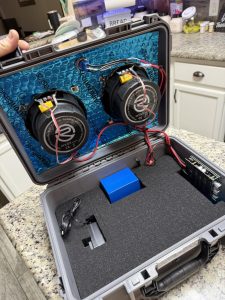
Explore 24V lithium battery applications for ride-on cars, DIY speakers, and portable equipment. Define your requirements and request a quote.
View details
Learn how to specify a custom lithium battery pack for OEM projects, including voltage, capacity, BMS, connectors, cell type, UN38.3, MSDS, UL and CE.
View detailsTags: rechargeable lithium batteries, distributor sourcing, OEM battery packs, battery connectors, BMS, security equipment | Body word count: 1,547 | Reading time: 7 minutes Distributors are often asked for a battery befor...
View detailsThe short answer is sometimes, but matching the "12V" label is not enough. A pack can fit the compartment and still be wrong for the motor surge, charger, connector or wet environment. So, can a lithium battery replace lead-acid in your product wi...
View details