 Lithium-ion & Polymer Battery Packs Manufacturer | KBT Battery


Company Blog
High quality high performance excellent service
Search productSearch post
High quality high performance excellent service
About 2,700 words · 12 min read
Battery trouble in a medical device program rarely starts as battery trouble. It starts as one line on a spec sheet — 3.7 V, 3000 mAh, rechargeable — copied from the last project because that one shipped. Then the enclosure shrinks by four millimetres. Then validation asks for a document nobody ordered. Then someone finds out the cell has been discontinued, and the whole electrical section goes back to review.
If you are specifying a lithium polymer battery for a device that sits on a patient, next to a patient, or in a clinician’s hand, three questions decide whether the battery works out: how much capacity you actually need, how the pack behaves when something goes wrong, and what evidence you can produce when someone asks. Capacity, protection, validation. This walks through all three, plus the mechanical detail that quietly eats schedules.
Capacity looks like the easiest line on the spec, which is exactly why it causes trouble. A cell’s rated capacity is measured under specific conditions — a particular temperature, a particular discharge rate, down to a particular cutoff voltage. Your device will not run under those conditions. Pull more current than the datasheet test, or run in a cold room, and the usable capacity drops.
The practical way to size it is to work backwards from runtime rather than forward from a round number:
Required capacity ≈ average current × target runtime ÷ usable depth of discharge ÷ end-of-life derating
Average current matters more than peak current here. Most medical devices draw a modest steady current with occasional peaks, and sizing to the peak gives you a pack that is larger, heavier and more expensive than the job needs. The peaks matter for a different reason — they belong in the protection and BMS conversation, not the capacity one.
Two things get missed at this stage. The first is end-of-life behaviour. Rechargeable cells lose capacity through cycling and through simple calendar aging, and a device with a two-year shelf life before first use has already spent part of its life before it sees a patient. Decide what capacity floor you will accept at end of life — often expressed as a percentage of the original rating — and size the fresh pack so that the aged pack still delivers the runtime you promised.
The second is what “runtime” means for your users. A monitor that runs eight hours on a shift needs a different margin than an infusion pump that needs to finish a procedure and then some. If the device can be plugged in between uses, you have room. If it travels with a patient from one room to another, you don’t.
This is where pouch cells earn their place. A lithium polymer battery can be built thin and shaped to the space you actually have, rather than forcing you to design around a fixed cylinder. KBT’s thin LiPo line runs 3.7 V models with 5.0–6.4 mm profiles across roughly 80–4000 mAh — useful when the depth budget is the constraint and not the footprint. For anything outside that range, the 3.7 V polymer lithium-ion battery packs series covers a much wider spread with OEM/ODM assessment for capacity, dimensions, terminal wires and connectors.
Every pack worth buying has overcharge, over-discharge, overcurrent and short-circuit protection. Asking whether a pack “has protection” is a low-value question; the answer is almost always yes. The useful question is what happens after a single component fails.
Medical device teams think in terms of single-fault conditions, and the battery deserves the same treatment. If the primary protection IC latches up or a MOSFET fails short, is there a second, independent path that still opens the circuit? Does the pack report the fault to the host, or does it just quietly stop working? A battery that fails silently in a consumer gadget is annoying; in a clinical setting it is a safety question.
The same thinking applies to temperature. Monitoring one thermistor on a multi-cell pack tells you the temperature in one place. Cells near a charging circuit or a heat-generating module run hotter than cells at the far end, and that is usually where capacity loss and, in bad cases, thermal trouble start.
There’s also the shutdown behaviour to settle early. Devices that support monitoring or therapy are generally expected to warn before they lose power and to shut down in an orderly way rather than dropping out when the protection circuit trips. The alarm-system and home-environment collateral standards in the IEC 60601 family are where those expectations live — worth reading before you finalise BMS thresholds, not after.
The distinction that costs the most time: IEC 62133 covers the safety of the cell and battery itself. IEC 60601-1 covers the safety and essential performance of the finished medical device, and its battery provisions point back to IEC 62133 for secondary lithium cells. A pack that carries an IEC 62133 test report has not made your device compliant — the battery still has to be evaluated inside the finished device, under its real load, in its real enclosure, with its real charging circuit. UN 38.3 sits alongside both and covers transport only.
Electromagnetic compatibility deserves a line of its own. The BMS is electronics — it emits and it can be disturbed. IEC 60601-1-2 is where device-level EMC expectations sit, and a pack that passes bench testing can still trip its protection during EMC testing or put noise on a communication bus. Test the device with the battery installed, in every state: charging, discharging, full, near empty.
And all of this belongs in the risk management file. Battery-related hazards — leakage, rupture, thermal events, unexpected loss of power, capacity loss that goes unnoticed — are exactly the sort of thing ISO 14971 expects to see documented with their mitigations. The battery supplier can supply the cell and pack data you need for that analysis. The analysis itself is the device manufacturer’s.
Once capacity and protection are settled, the remaining argument is usually about wires. Specifically, where they come out.
A same-end terminal lithium battery pack brings both leads — or the connector — off the same side of the pack. On the face of it that’s a small thing. In practice it’s often the difference between a clean assembly and a service nightmare:
Opposite-end configurations still have their place — long packs that bridge two boards, or layouts where the leads need to reach separate compartments. The point is that it’s a design decision made with your mechanical engineer, not a line item you discover on a datasheet after the housing is tooled.
The same goes for the rest of the interface: connector family, wire gauge and length, whether you need a thermistor lead, whether the pack needs a hard housing or a wrapped finish, and what the label has to carry for traceability. None of these are exotic. All of them are cheaper to decide in week two than in week twenty.
Here’s the part that gets squeezed. Validation isn’t a certificate you request at the end — it’s a set of answers you collect while the design is still movable. This table is a reasonable starting checklist for a medical or regulated program.
| Question | What you need from the supplier | Who owns it |
|---|---|---|
| What is the capacity at end of life, and how was it derived? | Cycle-life and calendar-aging data for the exact cell, at stated temperature and depth of discharge | Supplier provides data; you set the acceptance criterion |
| What are the BMS protection thresholds? | A parameter table: overcharge, over-discharge, overcurrent, short-circuit, temperature limits | Supplier provides; you confirm against the device’s operating envelope |
| Is there independent secondary protection? | Block diagram and fault behaviour description | Joint — you specify the requirement |
| What is the transport classification and file? | UN 38.3 test summary matching the exact model, plus SDS | Supplier |
| What battery safety standard does this model hold? | IEC 62133 and/or UL 2054 reports as applicable — model-specific, not family-wide | Supplier; verify the model number matches |
| What happens if a cell or supplier changes? | A written change-control commitment, and re-validation of affected tests | Joint — and worth putting in the purchase terms |
| Can you trace a pack back to its cell lot? | Batch or lot traceability records | Supplier |
Ask for documents per model number, not per product family — a report covering one cell does not cover a pack built from it with a different BMS and housing. And treat any cell or supplier change as a re-validation trigger even when the electrical spec looks identical, because that is what quietly invalidates a UN 38.3 reference and restarts the document chase.
If your organisation builds anything besides medical devices, you may already be buying a battery for industrial automation — AGVs, inspection gantries, handheld scanners, backup power for controllers. It’s worth knowing how those requirements diverge, because the same supplier can often serve both and the spec priorities are almost inverted.
Industrial packs live by duty cycle and environment: long shifts, continuous loads, wide temperature swings, dust and washdown, and a service life measured in thousands of cycles. Documentation requirements are lighter — no IEC 60601 evaluation, no risk management file entry for patient harm. What you gain in paperwork simplicity you lose in environmental toughness.
Medical packs invert that. The electrical duty is often gentler, and the document burden is much heavier. Where the two meet is in the boring fundamentals: cycle life tested under stated conditions, honest temperature limits, and traceability. A supplier who can show those for an industrial pack is usually able to show them for a medical one — the difference is how much of it has to be formally documented.
KBT’s 11.1 V 10000 mAh 21700 pack is a typical example of the industrial end of that range — robotics, instruments and OEM integration — while the outdoor waterproof pack covers the sealed-enclosure side.
Standard models will cover a lot of programs, and if a catalog pack fits your space, current and temperature envelope, buying it is faster and cheaper. A battery pack design service earns its keep when one of these is true:
KBT runs custom projects through a set sequence — requirement review, engineering evaluation, sample customisation, pilot run, sample validation, then batch production — and the engineering evaluation stage explicitly covers cell selection, pack structure, BMS, materials, production feasibility and the compliance documents the project will need. If you’re going down that route, the information that makes the first conversation productive is: application, voltage, capacity, maximum dimensions, continuous and peak discharge current, connector and wire length, quantity, and the certifications you’ll be asked for. The OEM page at the KBT battery project support page lays out the sequence and the inputs in detail.
KBT (Shenzhen Keep Better Tech Electronics Co., Ltd.) has manufactured rechargeable lithium batteries in Shenzhen since 2009 and works with distributors, importers, equipment manufacturers, private-label brands and system integrators, primarily for North America. The portfolio covers lithium-polymer packs, cylindrical cells and packs, and lithium-ion packs across 3.7 V to 36 V classes. Medical equipment appears among the application examples on KBT’s own materials — portfolio-level examples, with product-specific suitability confirmed per project rather than assumed.
On documents, KBT’s position matches the one this article keeps repeating: available documents depend on the specific model and configuration, and may include UL, IEC 62133, KC, CE, CQC, REACH, RoHS, UN 38.3 and MSDS along with model-specific test reports, with the applicable set confirmed against the destination market and required standard before quotation. Name the market and standard first, then confirm the file — not the other way around.
What KBT does not do is make your device compliant. Battery-level reports, configuration options, prototype samples and production traceability are what a pack supplier brings. The IEC 60601-1 evaluation, the EMC testing, the risk management file and the regulatory submission are yours. Any supplier who implies otherwise is selling you something.
No. That report covers the cell or battery as an article. Your device still needs to be evaluated with the battery installed, under its real load and charging conditions, because the interaction between pack, host and enclosure is where a lot of problems show up. Think of the battery report as one input to device-level testing, not a substitute for it.
There’s no universal number, and anyone who gives you one without knowing the duty cycle is guessing. Start from the runtime you need at end of life, then work back through usable depth of discharge and expected aging. The margin falls out of that calculation rather than being added on top of it.
Ask your mechanical engineer, not your battery supplier. Same-end exit tends to win when the housing is slim, when both leads land on one board, or when assembly repeatability matters. Opposite-end wins for long packs bridging two boards or compartments. It’s a layout decision — just make it before the housing is tooled.
You do. The supplier owns the battery-level evidence and the configuration you specified; you own the device-level evaluation, the risk management documentation and the submission. Getting that boundary in writing at the start saves arguments later, particularly when a question comes back from a reviewer.
The most useful first message a battery supplier can get from a medical device team isn’t a part number — it’s the constraint list. Application, voltage, capacity, maximum dimensions, continuous and peak discharge current, connector and wire length, where the leads need to exit, quantity, target market, and the standards and documents your submission will require. With that, a supplier can tell you quickly whether a standard model fits or whether you’re looking at a custom pack, and which documents come with it.
Send your project details through the KBT contact page for a specification review, sample evaluation or a quotation that names the documents included. Medical programs move slowly for good reasons — the battery shouldn’t be the reason they move slower.
The short answer is sometimes, but matching the "12V" label is not enough. A pack can fit the compartment and still be wrong for the motor surge, charger, connector or wet environment. So, can a lithium battery replace lead-acid in your product wi...
View details
Learn how to specify a custom lithium battery pack for OEM projects, including voltage, capacity, BMS, connectors, cell type, UN38.3, MSDS, UL and CE.
View detailsCategory: Duty Cycle Matching · About 2,100 words · 11 min read Three products, one bad habit. A motorcycle gets a battery sized by the biggest current it might ever draw. A solar installation gets a bank sized by its worst month. A portable instr...
View details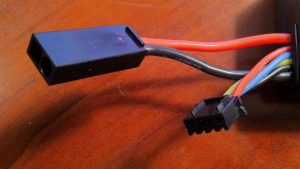
Learn how to specify a custom lithium battery pack with cable and connector. Use this buyer checklist and contact KBT for an OEM quote.
View details