 Lithium-ion & Polymer Battery Packs Manufacturer | KBT Battery


Company Blog
High quality high performance excellent service
Search productSearch post
High quality high performance excellent service
The short answer is sometimes, but matching the “12V” label is not enough. A pack can fit the compartment and still be wrong for the motor surge, charger, connector or wet environment.
So, can a lithium battery replace lead-acid in your product without a redesign? This guide gives ride-on toy brands, marine-electronics buyers and small-equipment manufacturers a practical way to decide. It focuses on the electrical and mechanical checks that should happen before you approve a sample, advertise compatibility or place a repeat order.
Lithium packs are attractive where weight, runtime and portability matter. LiFePO4 is a common 12V-class candidate because a four-cell series pack is nominally around 12.8V. Other lithium-ion configurations may serve 12V-class equipment, but their voltage range and charging requirements differ.
Potential advantages include:
Results depend on the cells, BMS, load and duty cycle; they are not universal runtime or service-life promises.
| Decision point | Lead-acid system | Lithium replacement question |
|---|---|---|
| Nominal voltage | Often sold as a 6V or 12V class | Does the full operating range suit the controller? |
| Capacity label | Usually stated in Ah | Compare energy in Wh and the actual load profile |
| High current | Chemistry can tolerate certain surge patterns | Can the cells, BMS and connector handle startup or stall current? |
| Charging | Uses a lead-acid charging profile | Is the charger approved for the exact lithium chemistry and pack? |
| Low-voltage behavior | Voltage declines progressively | Will BMS cutoff interact correctly with the equipment? |
| Mechanical fit | Case and terminal layout may be standardized | Do dimensions, mounting, cable exit and polarity match? |
| Environment | Product-specific enclosure | Is the complete pack and connector suitable for moisture and temperature? |
Capacity should be compared in watt-hours, not amp-hours alone:
Energy (Wh) = Nominal voltage (V) x Capacity (Ah)
KBT lists its 12.8V 5Ah LiFePO4 lead-acid replacement packs as 64Wh. Runtime still depends on load, losses, cutoff settings and conditions.
A 12V lithium battery for a ride on toy must satisfy more than cruising current. Motors draw more when starting, climbing or approaching stall. If BMS overcurrent protection is below that demand, the toy may shut down on grass or a slope.
Record continuous current plus startup and stall behavior. Do not select from motor wattage alone; include accessories sharing the battery.
Ride-on toy connectors vary by brand and model. The housing color or shape does not prove the pinout. Confirm:
KBT’s 12.8V 5Ah LiFePO4 ride-on toy battery is listed with red, black and blue connector options, a 64Wh rating and a maximum continuous discharge current of 10A. Those values describe the displayed configurations only; the vehicle requirement still needs to be checked before the pack is treated as compatible.
A sealed lead-acid charger should not be assumed suitable for lithium. Voltage, current, termination and fault response must match the pack. A BMS does not turn any charger into a compatible lithium charger.
For a consumer product, also consider how users will distinguish the new charger from old stock and whether the connector prevents accidental cross-use.
A fish finder has a steadier load, but runtime, portability, moisture, cold conditions and connection reliability matter.
Start with the equipment’s average power rather than screen size or marketing runtime. A simple first estimate is:
Runtime (hours) is approximately Battery energy (Wh) / Average load (W)
Actual runtime varies with efficiency, temperature, accessories and cutoff behavior. Test with sonar, display brightness, GPS and connected modules operating normally.
KBT lists a 12.8V 20Ah battery pack for ride-on vehicles and fish finders at 256Wh with a stated maximum continuous discharge current of 20A. Buyers should verify chemistry, charger, dimensions, connector and application conditions for the exact model before ordering.
A wrapped battery is not automatically ready for rain or spray. Enclosure seams, cable exit and the mated plug affect exposure resistance. State the mounting and exposure, and request evidence for any required IP rating.
Portable instruments, lighting, monitors, pumps and control equipment may be candidates, but their electronics expose hidden compatibility issues.
Check these five interfaces:
Alternator, solar-controller and built-in charging systems need extra review before conversion.
Do not market a lithium pack as “drop-in” when any of these remain unknown:
Changing chemistry may affect the end product’s regulatory file; review this for the target market.
When requesting a LiFePO4 lead acid replacement, send the supplier evidence rather than only the old battery label:
KBT offers standard and custom lithium battery packs and can evaluate the cells, voltage, capacity, BMS, wiring, enclosure, label and packaging. OEM/ODM review is appropriate when an interface changes.
For transport, document availability must be confirmed by model. The U.S. Pipeline and Hazardous Materials Safety Administration states that lithium cells and batteries offered for transport must pass the applicable UN 38.3 design tests and that test-summary information must be available in the supply chain.
Do not assume so. The charge voltage, current and termination behavior must be compatible with the exact lithium chemistry, cell count and BMS. Use a charger approved for the selected pack unless the battery supplier confirms the existing system in writing.
No. “12V” is a product class, not a complete voltage specification. Check the battery’s full voltage range against the device’s minimum and maximum input, controller behavior and low-voltage cutoff.
Calculate from average power and desired operating time using watt-hours, then allow margin for losses, temperature, accessories and cutoff behavior. Verify the estimate in a real-use test before making a runtime claim.
The motor’s startup or stall current may trigger BMS overcurrent protection. Cable voltage drop, a poor connector or an undersized pack can create similar symptoms. Measure current and voltage during the event before replacing parts.
Can a lithium battery replace lead-acid? Often, yes, but only when voltage range, energy, current, BMS, charger, connector, physical fit and environment are treated as one system. Ride-on toys emphasize surge current; fish finders emphasize runtime and moisture; small equipment may add charging-system and control-electronics constraints.
To evaluate a standard or custom replacement, send KBT an inquiry with the original battery specification, application, current profile, runtime, dimensions, connector photos, charger details, expected quantity, destination and compliance needs. KBT can then review the configuration against the actual equipment rather than guessing from the “12V” label.
A battery can pass a capacity test and still fail inside the customer's equipment. It may shut down when a motor starts, heat at the connector, refuse to charge, or work on the bench but fail after vibration and moisture exposure. These are not al...
View details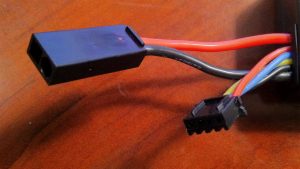
Learn how to specify a custom lithium battery pack with cable and connector. Use this buyer checklist and contact KBT for an OEM quote.
View detailsTags: OEM battery sourcing, custom lithium battery packs, battery procurement, cylindrical cells Total body word count: 1,537 Reading time: 8 minutes Choosing an OEM battery manufacturer is a product-risk decision, not simply a search for ...
View detailsTags: rechargeable lithium batteries, distributor sourcing, OEM battery packs, battery connectors, BMS, security equipment | Body word count: 1,547 | Reading time: 7 minutes Distributors are often asked for a battery befor...
View details