 Lithium-ion & Polymer Battery Packs Manufacturer | KBT Battery


Company Blog
High quality high performance excellent service
Search productSearch post
High quality high performance excellent service
Choosing between LiFePO4 energy storage, 18650 packs, 21700 packs, and a 7.4V LiPo design is a sourcing decision as much as an engineering decision. Each architecture changes voltage, usable energy, current capability, packaging, charger requirements, service, and documentation. The right battery pack OEM partner should compare complete pack proposals against the equipment duty cycle.
Define voltage window, average and peak current, runtime, duty cycle, dimensions, weight, mounting, temperature, vibration, charger, connector, and service access. For a battery for robotics, include motor startup, simultaneous actuators, controller loads, wireless bursts, braking or regeneration behavior, and the operating surface.
| Option | Questions | Watch points |
|---|---|---|
| LiFePO4 | What voltage, energy, BMS, charger, and enclosure suit the application? | Do not infer cycle life or safety without exact evidence. |
| 18650 | Which cell model, series/parallel layout, current profile, and matching method? | Format does not establish capacity or quality. |
| 21700 | Does the larger format improve complete-pack energy, current, space, or service? | Compare heat, sourcing, and validation. |
| 7.4V LiPo | Does a pouch architecture fit the space and peak load? | Confirm charger, BMS, enclosure, and thermal validation. |
Robots may combine motors, sensors, compute, lighting, and wireless communication. Measure simultaneous peaks, then test voltage sag, BMS response, connector retention, cable movement, thermal rise, and runtime in the platform.
A battery pack label and packaging OEM project should define model identity, warnings, revision, barcode or traceability, artwork ownership, packaging protection, and shipping configuration. Keep artwork and specifications revision-controlled.
Test fit, polarity, charging, capacity or runtime, continuous and peak load, temperature, protection, host-device operation, and service actions. Confirm exact cell, BMS, charger, connector, labels, packaging, and documents.
KBT supports lithium-ion, LiFePO4, lithium-polymer, and cylindrical projects with BMS, connectors, cables, chargers, labels, packaging, sampling, and OEM/ODM development. Review the KBT energy-storage category and contact KBT.
Safety depends on cells, BMS, charger, enclosure, manufacturing controls, and validation.
Compare complete pack energy, current, dimensions, thermal behavior, sourcing, and validation.
Discuss artwork, labels, packaging, quantities, and approval steps with the supplier.
Send KBT your application, voltage, current peaks, runtime, dimensions, charger, BMS, environment, forecast, target market, and documents. Request a battery pack OEM review.
Tags: OEM battery sourcing, custom lithium battery packs, battery procurement, cylindrical cells Total body word count: 1,537 Reading time: 8 minutes Choosing an OEM battery manufacturer is a product-risk decision, not simply a search for ...
View details
Learn how to specify a custom lithium battery pack for OEM projects, including voltage, capacity, BMS, connectors, cell type, UN38.3, MSDS, UL and CE.
View details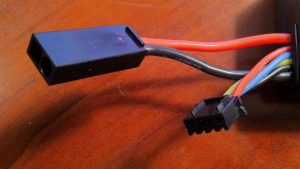
Learn how to specify a custom lithium battery pack with cable and connector. Use this buyer checklist and contact KBT for an OEM quote.
View detailsTags: rechargeable lithium batteries, distributor sourcing, OEM battery packs, battery connectors, BMS, security equipment | Body word count: 1,547 | Reading time: 7 minutes Distributors are often asked for a battery befor...
View details