 Lithium-ion & Polymer Battery Packs Manufacturer | KBT Battery


Company Blog
High quality high performance excellent service
Search productSearch post
High quality high performance excellent service
Distributors are often asked for a battery before the end application has been fully defined. A customer may say “we need a 12V lithium battery pack,” but that description does not tell a manufacturer the required voltage window, load current, runtime, connector, enclosure, charger, or shipping documents. The result can be a pack that fits the catalog description yet fails during installation or field use.
This guide gives distributors a practical conversation framework for evaluating a rechargeable lithium battery supplier. It applies to standard packs, private-label programs, and custom OEM/ODM projects. The goal is not to choose a nominal voltage in isolation; it is to create a complete, testable specification that the supplier can quote and sample.
Before comparing unit prices, ask the battery pack manufacturer to confirm six items in writing:
If any of these remain open, the correct next step is a specification review or sample evaluation—not a final purchase decision.
Nominal voltage is a naming convention, not the complete operating range. A distributor should provide the equipment’s acceptable input range and ask the manufacturer to state the pack’s nominal, full-charge, and cutoff voltages. This is especially important when replacing lead-acid batteries or when electronics include a narrow undervoltage threshold.
Capacity should be specified in ampere-hours (Ah) at a stated test condition. Ask whether the quoted capacity is measured at a particular discharge rate and temperature, and whether the customer’s load is continuous, intermittent, or pulsed. A camera, router, tracker, or alarm panel may draw a modest average current but still have startup or transmission peaks.
For a 12V lithium battery pack, confirm the actual cell configuration and the BMS current limits. For a 36V lithium battery pack, confirm the series count, charger voltage, and equipment controller limits before approving a replacement. Do not infer configuration, runtime, or compatibility from the voltage label alone.
| Input to provide | Why the manufacturer needs it |
|---|---|
| Nominal and allowable voltage | Matches the pack to the equipment and prevents over- or undervoltage faults. |
| Average, continuous, and peak current | Sets cell selection, BMS rating, wire gauge, connector rating, and thermal margin. |
| Runtime target or energy demand | Helps size capacity using the real duty cycle rather than a headline Ah value. |
| Charge method and time | Determines charger profile, connector arrangement, and charging protections. |
A connector is not a cosmetic choice. It controls fit, polarity, current capability, serviceability, and the risk of accidental connection. A useful battery connector selection guide should record the connector family, gender, pitch or barrel size, keying, contact count, wire gauge, cable length, latch, and mating part used by the equipment.
Send the manufacturer a drawing, photo with dimensions, or the equipment-side mating connector whenever possible. Ask for a first-article check that verifies pinout and polarity under load. For a replacement pack, also confirm whether the connector is used for charging, discharge, data, or a shared path. A connector that physically fits can still be electrically wrong.
Dimensions deserve the same discipline. Provide the maximum length, width, height, keep-out zones, screw locations, foam or bracket requirements, cable-exit direction, and any flexing or vibration exposure. If a pack is installed outdoors or in a sealed product, define the enclosure and venting assumptions; do not treat a generic “waterproof” description as a verified rating.
The battery management system (BMS) may protect against overcharge, over-discharge, overcurrent, short circuit, and temperature faults. The distributor should ask which protections are included, their thresholds, and how the pack recovers after a trip. Also ask whether balancing is included, whether the BMS supports a temperature sensor, and whether the equipment needs state-of-charge reporting or another communication interface.
Never approve a charger based only on a similar voltage label. The charger’s output voltage, current, chemistry profile, connector, polarity, and termination behavior must match the pack. If the product will be sold with a charger, request the complete pack-and-charger combination for sample testing. KBT’s site lists a Li-ion charger with DC5521 connector as an example of a product-level configuration; the correct charger for a new project still requires confirmation.
The same nominal pack can behave differently in a security camera, portable instrument, motorized device, or industrial controller. Describe the load profile: always-on or standby, startup surge, motor inrush, radio transmission, daily operating hours, recharge frequency, and acceptable low-battery behavior.
When sourcing a battery for security cameras, provide the camera, infrared illuminator, cellular or Wi-Fi modem, recorder, and any heater or pan-tilt accessory in the load estimate. Ask the manufacturer to size for the complete system, not the camera label alone. Note outdoor temperature, enclosure location, solar or mains charging, and the required backup duration. These inputs affect capacity, BMS settings, connector selection, cable loss, and enclosure design.
For mobile or industrial equipment, add vibration, shock, humidity, dust, altitude, and expected storage time. If the application is safety-critical or regulated, identify that at the start of the RFQ so the supplier can confirm the relevant design controls and documents.
Ask for documents that match the exact battery configuration and destination market. Depending on the product and shipping route, the package may require a specification sheet, user instructions, safety data, transport test documentation, labels, and charger information. Certification marks or test reports should never be assumed to apply to every pack in a supplier’s catalog.
Review how the supplier identifies cells, production lots, firmware or BMS revisions, and inspection records. Ask what happens if a cell, connector, cable, label, or enclosure changes. A distributor needs advance notice and an approval path so a “same model” replacement does not silently alter fit, runtime, or compliance status.
KBT describes support for standard packs and custom OEM/ODM projects, including cells, BMS, connectors, wire leads, labels, and packaging. These are portfolio-level capabilities; the exact design, documentation, and available testing must be confirmed for the project.
A clear RFQ saves time for both the distributor and the battery manufacturer. Include:
For a starting reference, review KBT’s lithium-ion battery-pack category and the 12V lithium-ion battery pack with cable. These pages can help frame a conversation, but they do not replace a project-specific confirmation of cells, BMS, connector, documents, or availability.
Not automatically. Compare the equipment’s voltage window, charge method, low-voltage cutoff, physical mounting, current demand, and connector. The supplier should confirm the complete replacement design.
Use a standard pack when its electrical, mechanical, connector, and documentation requirements already match the equipment. Choose a custom pack when fit, runtime, current, interface, branding, or compliance documents require changes.
Request a drawing or specification, cell and BMS details, charger information, pinout, labels, test plan, and the acceptance criteria. Test the pack in the real equipment across the expected load and temperature range.
No. Documents and marks are product- and market-specific. Ask the supplier to identify which reports apply to the exact configuration, and confirm any importer or transport obligations for your destination.
Distributors get better sourcing outcomes when they give the battery manufacturer a complete use case instead of a voltage and capacity guess. Send KBT your application, voltage, capacity or runtime target, current profile, dimensions, connector, BMS needs, quantity, target market, and required documents through the KBT contact page. The next step can then be a specification review, sample evaluation, or quotation based on a defined configuration.
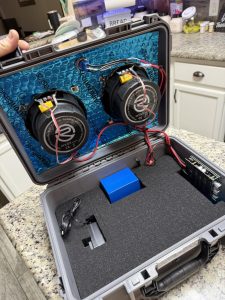
Explore 24V lithium battery applications for ride-on cars, DIY speakers, and portable equipment. Define your requirements and request a quote.
View detailsThe short answer is sometimes, but matching the "12V" label is not enough. A pack can fit the compartment and still be wrong for the motor surge, charger, connector or wet environment. So, can a lithium battery replace lead-acid in your product wi...
View detailsTags: OEM battery sourcing, custom lithium battery packs, battery procurement, cylindrical cells Total body word count: 1,537 Reading time: 8 minutes Choosing an OEM battery manufacturer is a product-risk decision, not simply a search for ...
View detailsA battery can pass a capacity test and still fail inside the customer's equipment. It may shut down when a motor starts, heat at the connector, refuse to charge, or work on the bench but fail after vibration and moisture exposure. These are not al...
View details